OVERVIEW
WHOOP Hormonal Insights is a new feature that has two modes: Menstrual Cycle Insights & Pregnancy Insights. However, they are treated as two separate modes in the app, which makes the experience not seamless and confusing. My task is to turn the experience from “switching modes” to “going through life stages”.
My Role
Product Designer
Team
1 Product Manager
6 Developers
Design Timeline
2 months, 2025
PROBLEM
“My Menstrual Cycle Insight shows my pregnancy as 300+ days of menstruation.”
This is a quote from a user, which reflects the lack of connection between the two modes. Moreover, lots of users had trouble switching between the modes, or didn’t know that pregnancy insight exist in the app.
Currently, WHOOP only has two modes, and the experience does not feel inclusive of women in other stages.
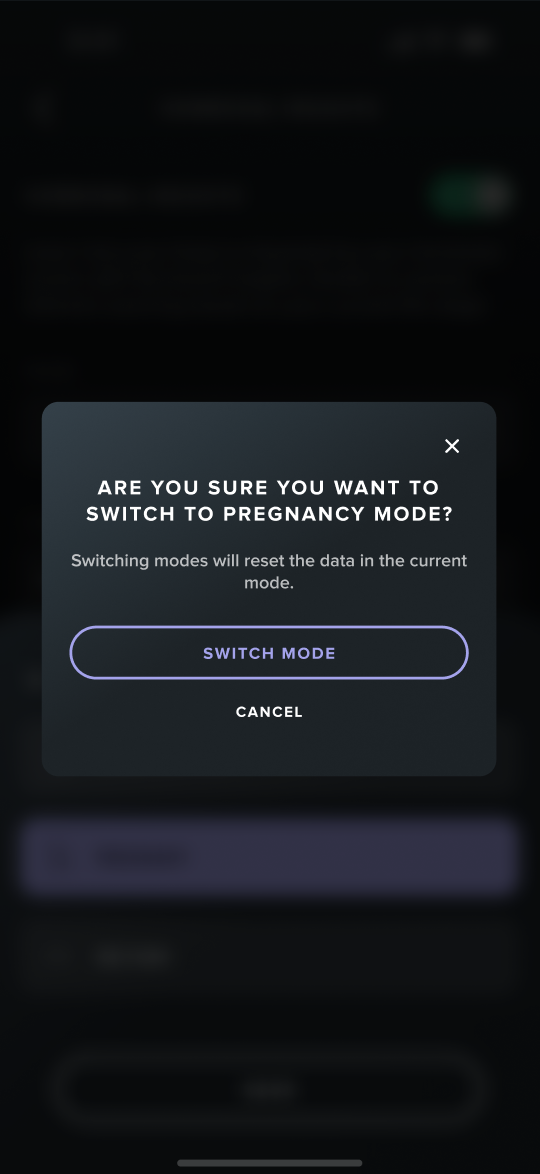
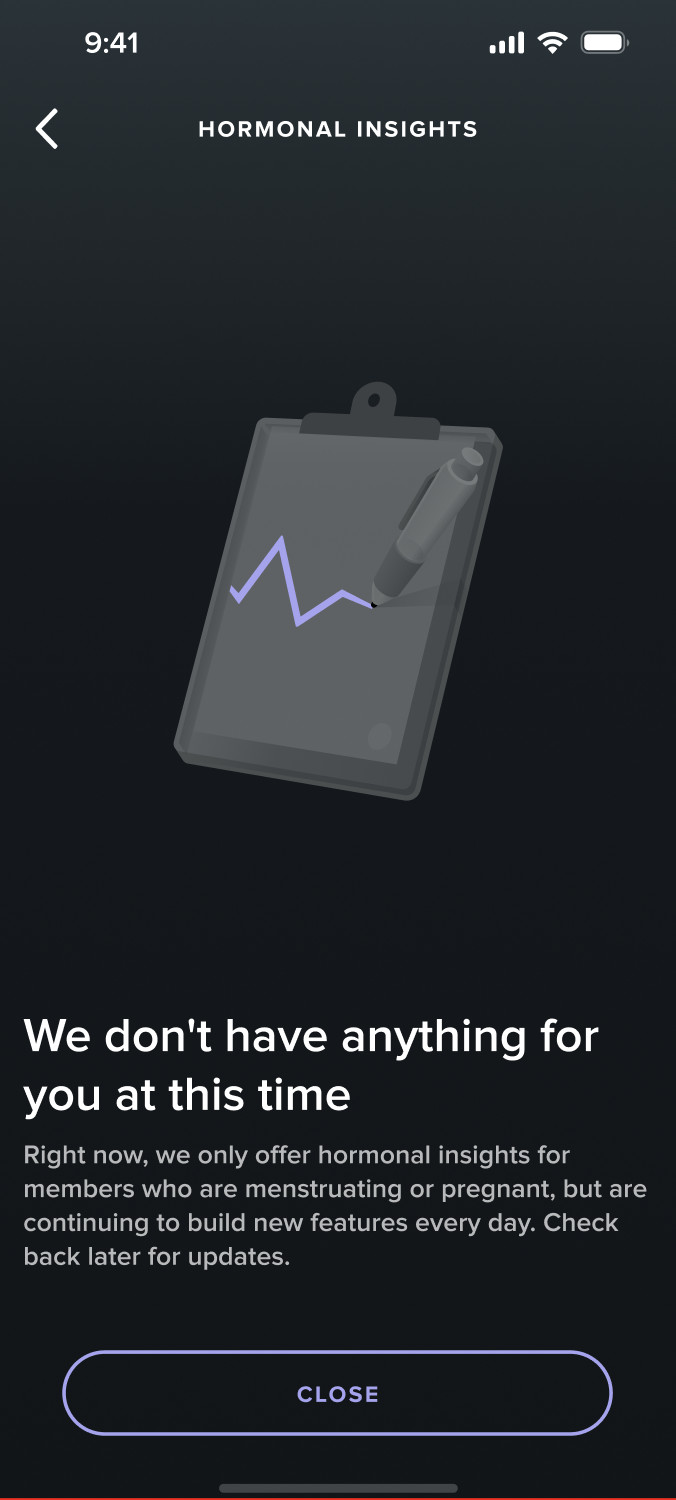
This copy feels more like a warning than an invitation.
INVESTIGATION
How do we turn “mode switching” into a seamless and supportive experience for women?
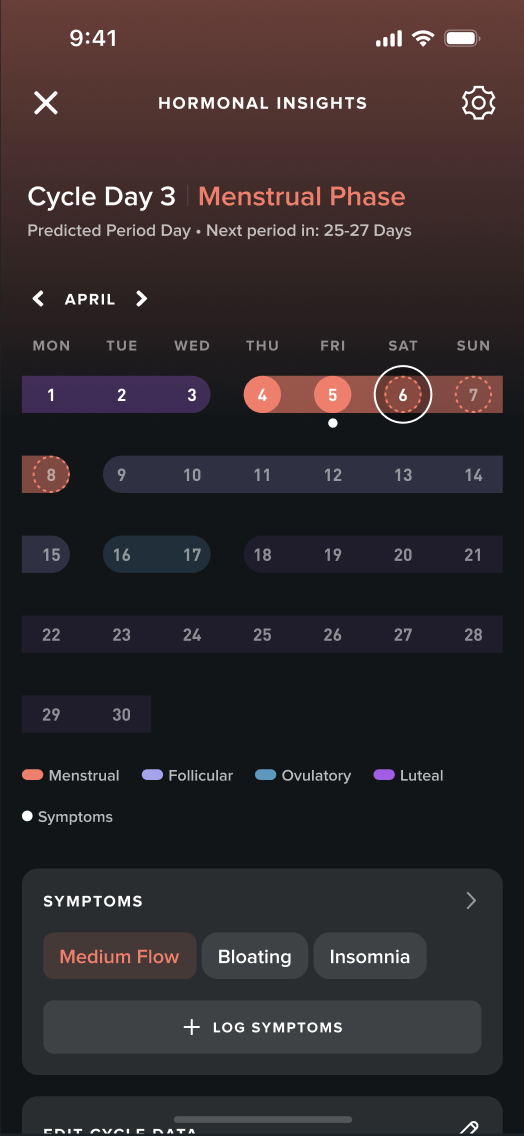
How the app is set up:
There are only two modes in women’s health: menstrual cycle + pregnancy. The menstrual cycle insight assumes that every woman has regular period without the consideration of women’s health issues and birth controls.
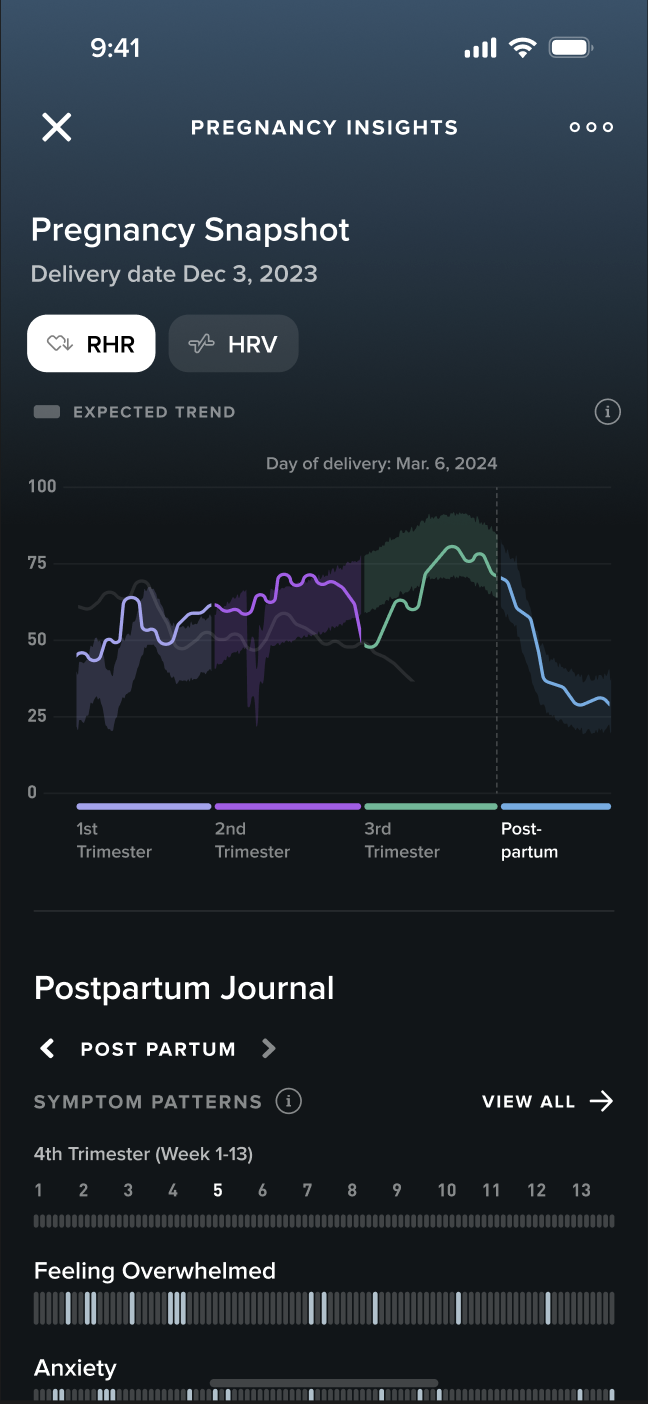
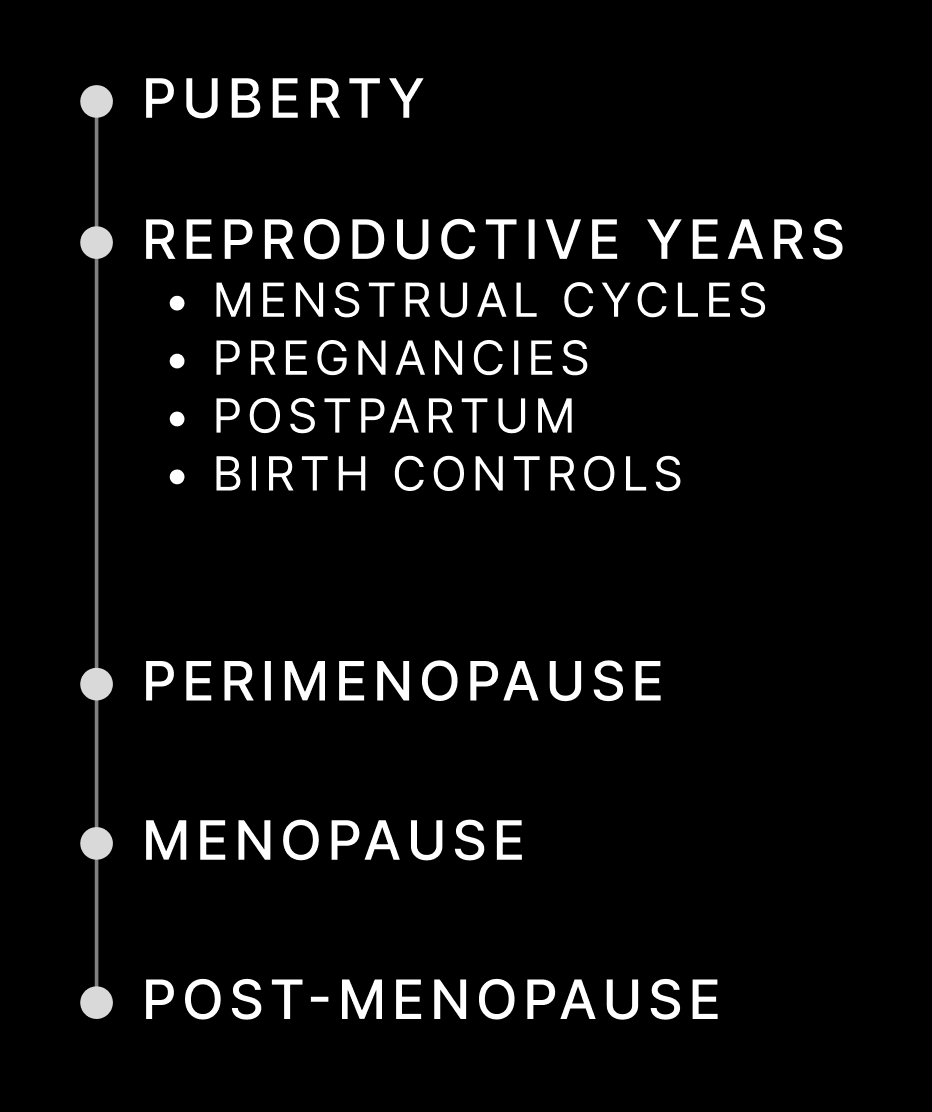
Provide a holistic and inclusive experience that portrays women’s health as a journey that includes:
integrated personal data and overview of women’s health journey
educational data visualization and guidance
considerations of women who have irregular period or no period during the reproductive years
User’s mental model:
Women’s health is a life long journey. Menstruation and pregnancy are only small parts of it.
My goal:
SOLVING SETTINGS PAGE
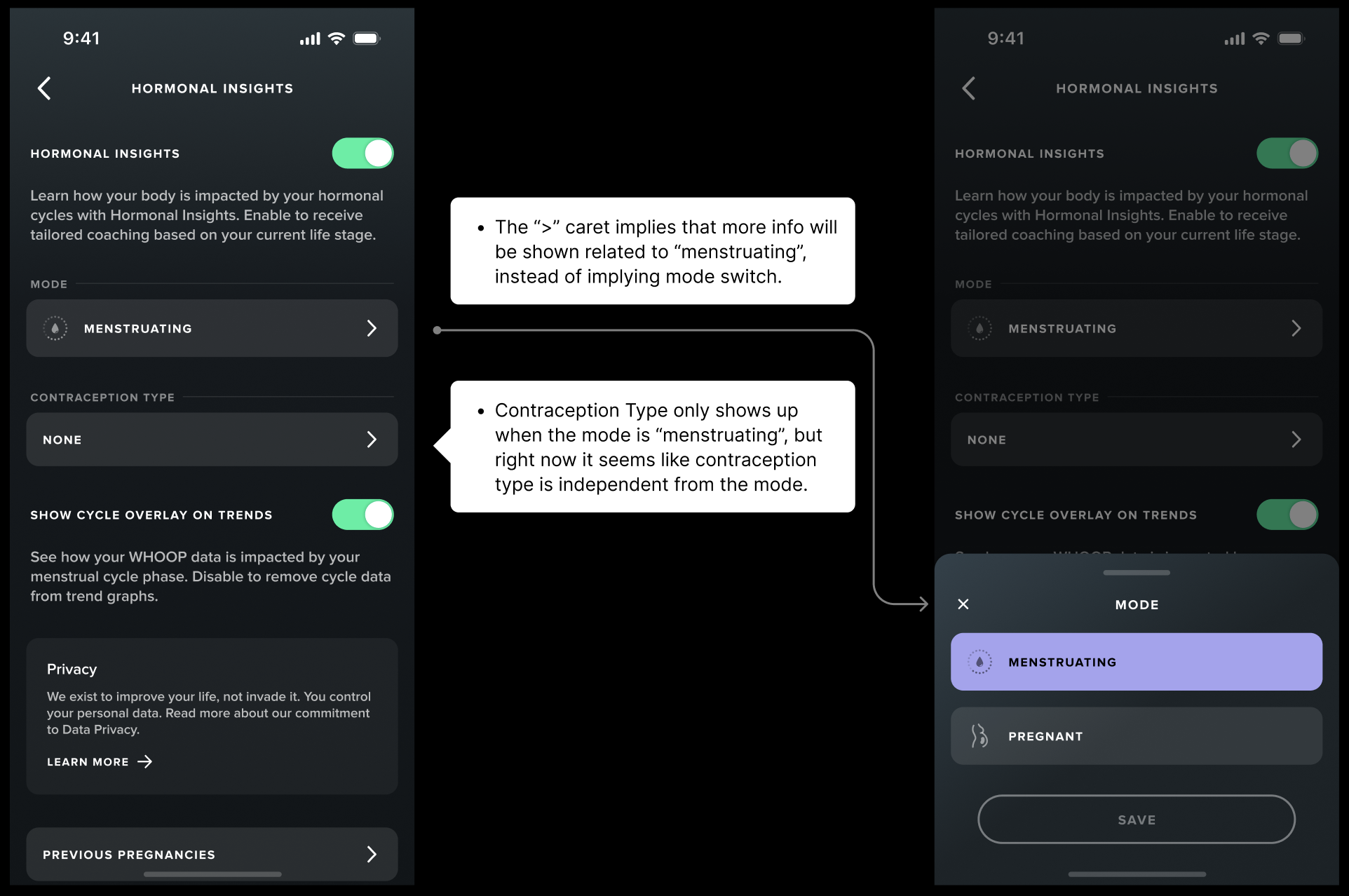
I started looking into the settings page, since most users have trouble switching modes. How do I surface both modes?
I drafted different versions of the settings, looking for an appropriate pattern.
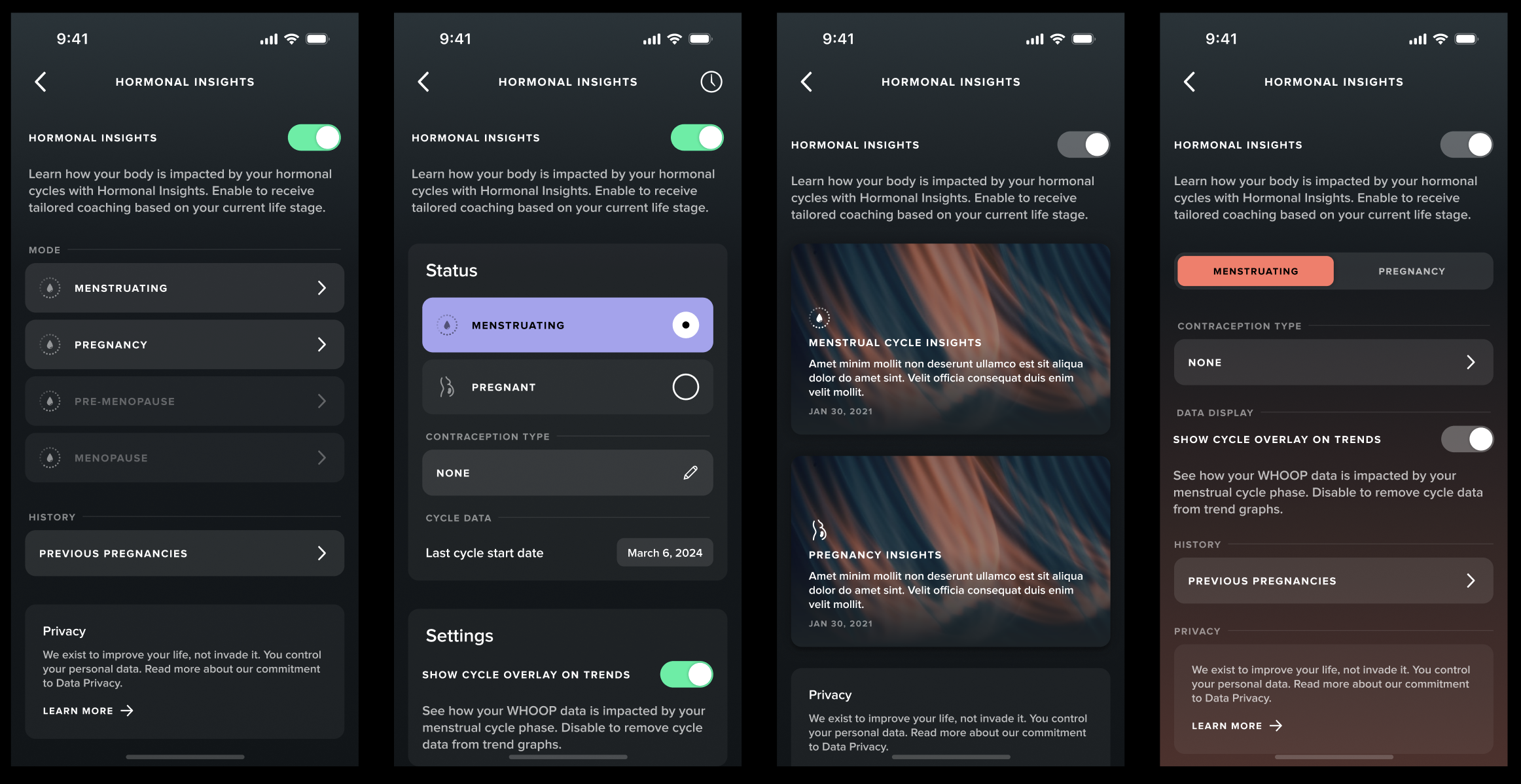
And… they all suck. They only addressed the surface problem.
These designs look so mechanical. Moreover, they still gave users a strong stereotype that “women either are pregnant or they are having regular cycles.” I don’t like that narrative as a designer, a health enthusiast, and woman myself. So my new direction is:
What is a design concept that fits better with users’ mental model? And how can the design provide value?
We never hear women saying that they “switch between being menstruating and being pregnant”. Women often narrate their life as a story, as a journey. I was thinking through my own experience, and…
When nurses asked me when did I get on my birth control, I couldn’t answer.
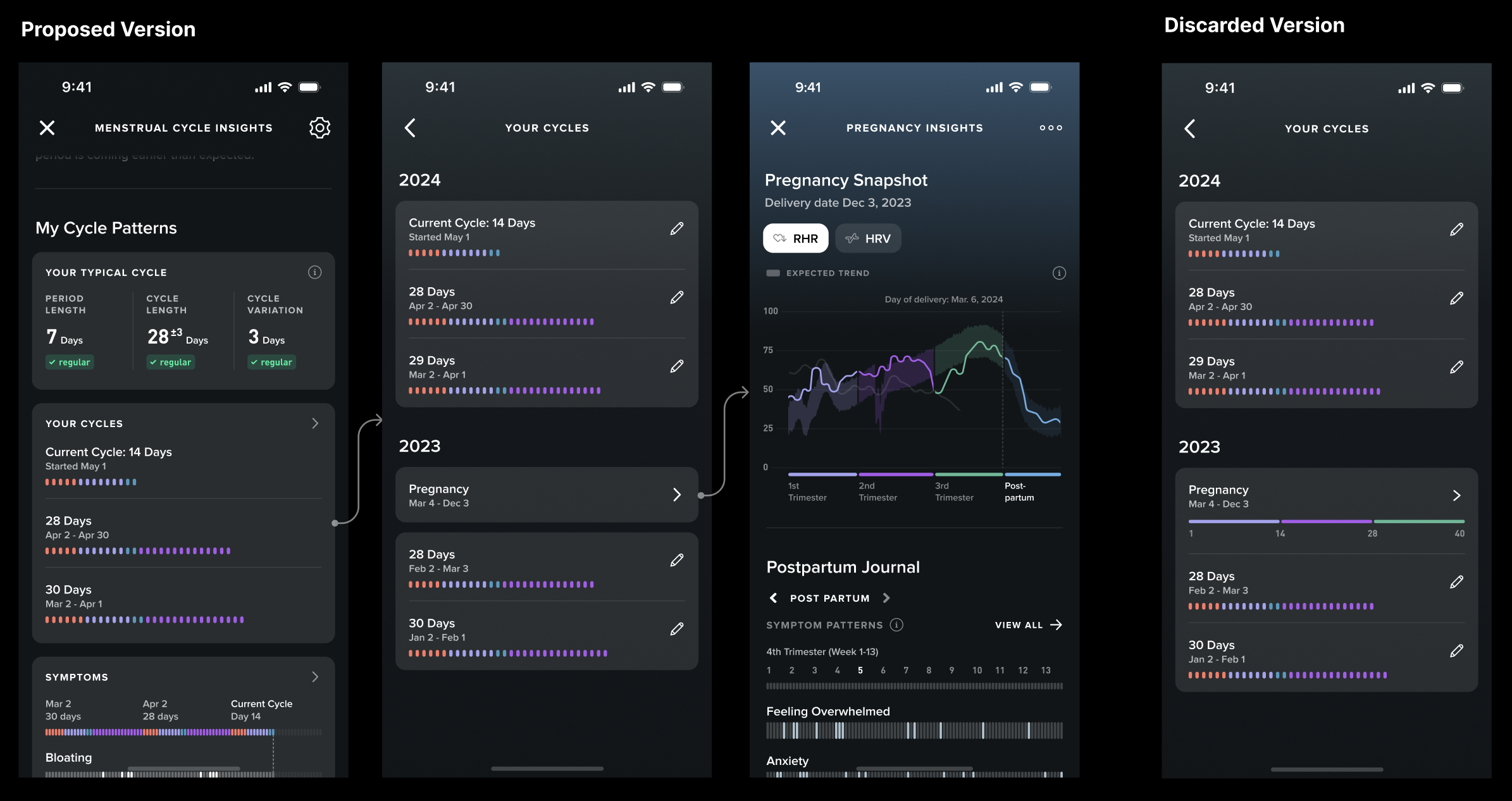
I proposed the timeline view—a holistic visualization of your reproductive health journey that consolidates medical information like birth control types and significant events in one place. The settings page is no longer just about settings, but a useful way to provide value.
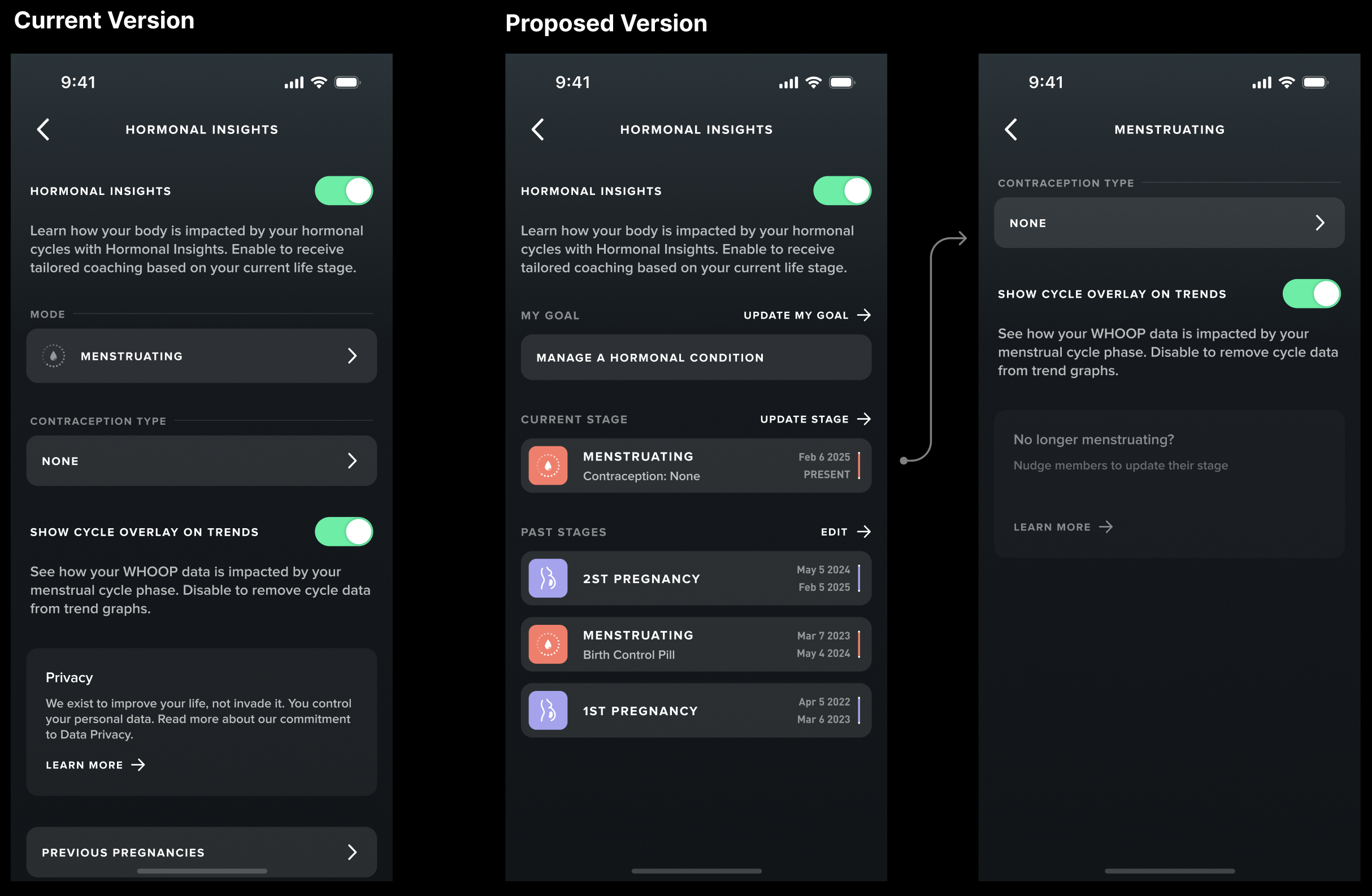
How do we apply the “timeline view” outside of the settings page?
The team likes the concept a lot. One engineer said:
“It’s a shame that it only exists in the settings page!”
Since the current “My Cycle Patterns” only shows menstrual cycle data, and will show pregnancy data into 300+ days of menstruation due to data, the engineering team worked on data integration. We were able to display pregnancy information in the page.
We wanted to add the pregnancy data too (shown in the discarded version), but in consideration of sensitive cases such as miscarriage, we decided to hide any surface data.
SOLVING FEATURE ONBOARDING
How do we build an experience that considers the full spectrum of women's health
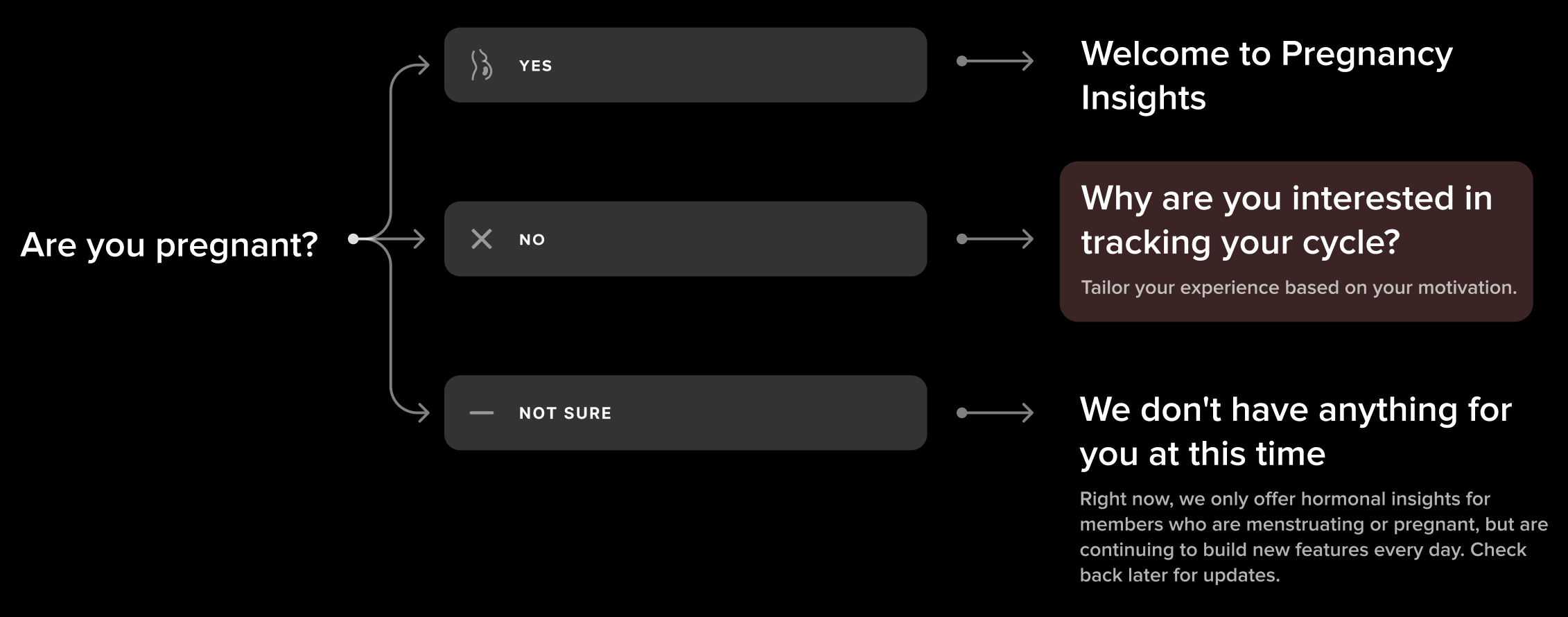
There’s a logical flaw in this onboarding flow.
If users click “no” to the question, the next question directly jump to “why are you interested in tracking your cycle”. This assumes that if you're not pregnant, you must be tracking your cycle.
The reality is, many non-pregnant women don't menstruate due to birth control, menopause, PCOS, or other health conditions.
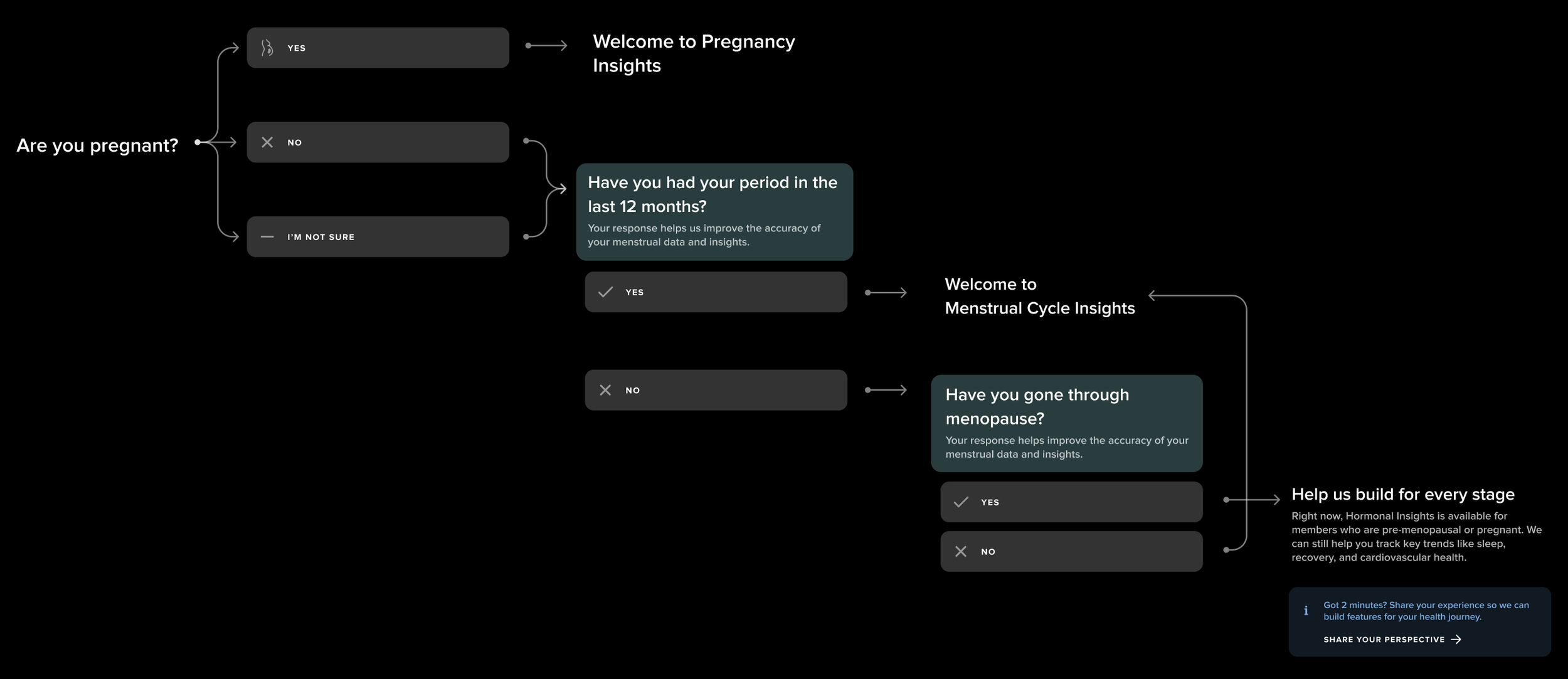
To make the flow more inclusive and informative, I identified key factors that would shape the decision tree:
Non-pregnant women fall into two distinct groups: reproductive years, non-reproductive years
The next question should address both groups and differentiate them in the flow.
One diagnostic criterion for menopause is 12 consecutive months without a period
A question about recent menstruation could serve dual purposes: confirming cycle tracking relevance and identifying potential menopausal users
The majority of WHOOP users are in their reproductive years
The flow should be optimized to route this primary demographic efficiently while still accommodating other life stages
And supportive copies!
The flow needs to acknowledge multiple life stages
Even though we only have two modes right now, we don’t want to make any group feel like an afterthought.
An inclusive and supportive flow…
My PM and I were playing this game of logic for a few days. Here’s the final flow we came up with. By adding two questions “Have you had your period in the last 12 months?” and “Have you gone through menopause?”, we were able to address most of the life stages and cases in women’s health.
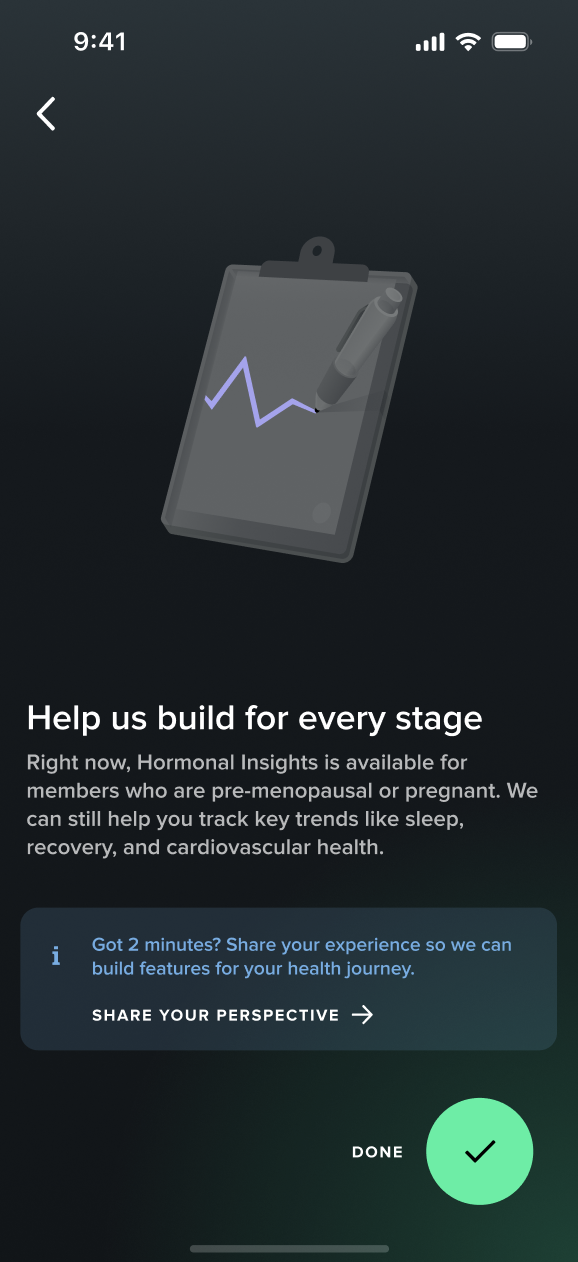
The old copy is pessimistic, which discourages users to come back again. To make sure everyone feels supported and that they can help us to build new features, I changed the style of the copy. Instead of “sorry, nothing for you”, “we want to help you” is the right message to convey.